The Global Microbiome Conservancy Expands the Map. It Does Not Solve the Field.

Janeen Interlandi’s July 8th 2026 New York Times Magazine article "Our Bacteria Are Talking. We've Just Begun to Understand What They're Saying" is a serious and valuable piece of microbiome journalism. It exposes one of the field’s most consequential failures. We have tried to define the human microbiome using samples drawn disproportionately from wealthy, industrialized, geographically narrow populations, then treated the patterns found in those cohorts as though they represented humanity.
They do not.
A model that can distinguish health from disease in the United States, Canada, or Western Europe but fails when applied elsewhere has not discovered a universal microbial signature of health. It has discovered the limits of its reference population. That failure could reflect real biological differences, but it could also reflect diet, medication exposure, social conditions, disease prevalence, sample handling, database bias, technical variation, overfitting, or some combination of all of them.
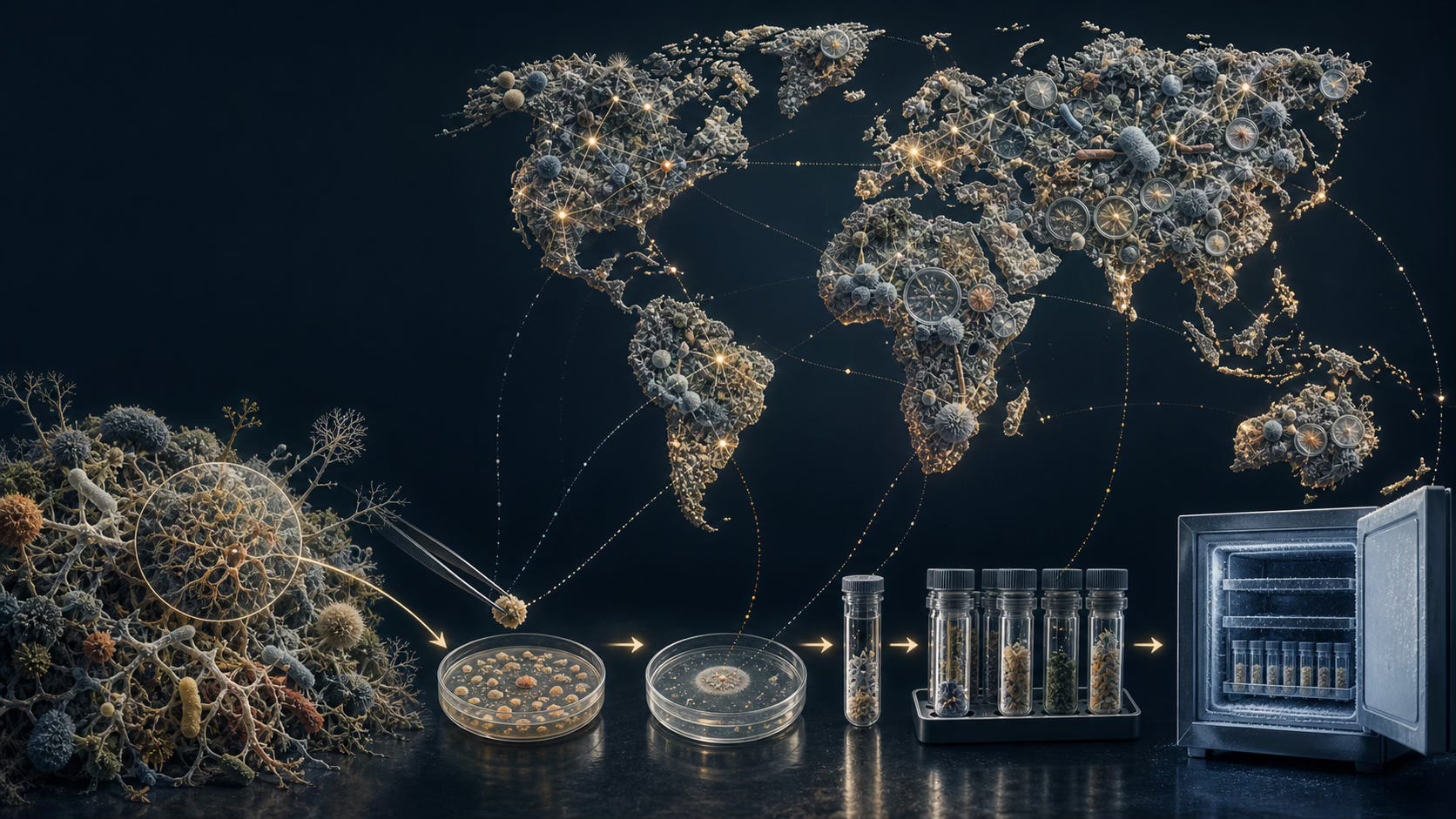
The Global Microbiome Conservancy is trying to correct part of this problem by collecting, culturing, sequencing, and preserving organisms from populations that microbiome science has largely ignored. That work is important. It expands the range of human-associated microbial diversity available for study, improves reference databases, creates access to viable strains, and gives researchers the ability to ask questions that would otherwise become impossible if those organisms disappear.
But the project does not solve the central problems of microbiome science.
It expands the map. It does not tell us what health is.
It preserves organisms. It does not establish their causal importance.
It creates a global collection. It does not automatically create global equity.
It generates biological possibility. It does not guarantee clinical utility.
Those distinctions matter because microbiome science has a habit of moving quickly from observation to meaning. We detect a difference and call it dysbiosis. We find lower diversity and call it depletion. We identify an organism in a healthy population and call it beneficial. We recover a strain absent from industrialized cohorts and begin imagining restoration.
The collection is real. The meaning is still under investigation.
Expanding the Map Does Not Define Health
The Conservancy addresses a genuine reference problem. Most microbiome datasets are not representative of the world’s populations, diets, environments, social structures, or medical exposures. Broadening that reference universe is scientifically necessary.
But a larger and more diverse collection will not produce a universal healthy microbiome simply by adding more samples.
The idea of a healthy microbiome is already unstable. Health is not one taxonomic state. Two healthy people can have substantially different microbial communities. Different populations may maintain similar biological functions through different organisms. A community that looks depleted relative to one reference group may be normal within another ecological and cultural context.
This is why diversity is such a dangerous shortcut. Higher microbial diversity is often treated as inherently healthier, even though that relationship is not universal. Infant microbiomes are naturally less diverse than adult microbiomes. Vaginal communities dominated by specific Lactobacillus species may be low in diversity and protective. Increased diversity can sometimes reflect instability, invasion, or the mixing of ecological niches.
More organisms do not automatically mean better function. Fewer organisms do not automatically mean disease.
A global collection can show us how much microbial variation exists. It can reveal which taxa and genes are common, rare, geographically restricted, or associated with particular lifestyles. It cannot determine health without longitudinal data, host physiology, clinical outcomes, diet, medication history, microbial activity, and ecological context.
The map gets larger. The definition of health may become more complicated, not less.
That would still be progress.
Preserving an Organism Does Not Establish Its Importance
The Conservancy’s decision to culture strains rather than merely sequence stool samples is one of its greatest scientific strengths. Sequencing tells researchers that genetic material was detected. Culturing produces viable organisms that can be studied, manipulated, combined into defined communities, and tested experimentally.
But culturing also introduces another layer of interpretation.
A strain recovered from stool is removed from the environment in which it was living. It is placed onto selected media under selected atmospheric conditions. Colonies are chosen, purified, expanded, identified, aliquoted, frozen, thawed, and grown again. Every step favors organisms capable of surviving that workflow.
The archived isolate is biologically real, but it is not a frozen copy of the function it performed inside the donor.
Inside the gut, bacterial behavior depends on nutrient availability, neighboring organisms, bacteriophages, oxygen gradients, bile acids, host secretions, immune pressure, spatial location, and metabolic cross-feeding. Remove the strain from that network and its gene expression and metabolic output may change dramatically, even if its genome remains largely intact.
This does not make the isolate useless. It changes what the isolate represents.
A sequence captures biological potential. A cultured strain allows that potential to be tested. Neither proves what the organism was doing in the original host.
That distinction should shape how researchers interpret the collection. An organism found in a healthy person may have contributed to health. It may also have been supported by the same diet and environment that supported health. It may be functionally redundant with several other species. It may be a marker of an ecological state rather than a driver of it.
Presence is not causation. Preservation is not validation.
The Conservancy gives science the ability to ask whether these organisms matter. It does not answer the question simply by recovering them.
A Global Collection Does Not Automatically Create Global Equity
The article is also right to treat underrepresentation as more than a technical problem. Whose samples enter microbiome science affects whose biology becomes visible, whose health becomes the standard, and who benefits from future discoveries.
But geographic inclusion is not the same thing as equitable science.
A collection can contain samples from around the world while decisions about storage, access, analysis, funding, authorship, intellectual property, and downstream development remain concentrated in a small number of institutions. It can be globally sourced and still be unevenly governed.
That does not mean the Global Microbiome Conservancy is operating inequitably. Its public materials describe participant ownership, noncommercial research access, withdrawal rights, capacity-building efforts, and international collaboration. Those commitments appear more thoughtful than the vague equity language attached to many global science projects.
Still, equity should be judged by structure, not aspiration.
The relevant questions are practical. Who decides which projects receive strains? Are scientists and communities from contributing regions represented in governance? Where are duplicate collections stored? Who controls derivative data? What happens if an academic discovery later becomes a commercial product? How are benefits shared? Can communities influence downstream uses after organisms have been cultured and distributed?
These are not accusations. They are the questions required to determine whether global sampling has produced shared scientific power or merely broader biological input.
A collection does not become equitable because it is diverse. Equity depends on who retains authority over what the collection becomes.
Biological Possibility Is Not Clinical Utility
The Conservancy may eventually contribute to important therapeutic discoveries. Its strains could reveal novel enzymes, metabolites, pathways, ecological interactions, or candidates for defined microbial communities. That possibility is one of the strongest arguments for preserving them.
Possibility, though, is not utility.
The history of microbiome science is full of organisms associated with health, disease, treatment response, inflammation, metabolism, and neurological conditions. Far fewer have survived the transition from association to mechanism, and fewer still have produced reproducible clinical benefit.
An organism can appear promising and still fail because it does not engraft, cannot compete with the resident community, requires a diet the recipient does not consume, behaves differently in another host, or produces a metabolite only in the presence of specific microbial partners. Even successful colonization does not guarantee that the organism changes a meaningful clinical outcome.
The most successful microbiome interventions have generally worked in settings where ecology was already profoundly disrupted. Fecal microbiota transplantation for recurrent Clostridioides difficile infection is effective not because clinicians identify and replace one missing ancestral organism, but because they restore colonization resistance within a damaged ecosystem.
That success has not generalized easily to obesity, inflammatory bowel disease, neurological disorders, or most other conditions associated with microbiome differences. Those diseases involve more complex host biology, more stable resident communities, and far less certainty about whether the microbiome is a cause, a consequence, or one modifier among many.
The Conservancy can provide candidate organisms. It cannot bypass the need for mechanistic studies, ecological reconstruction, host stratification, manufacturing controls, safety testing, randomized trials, and independent replication.
A freezer full of rare strains may become an extraordinary scientific resource.
It is not a pipeline of future medicines.
The Harder Question
The New York Times article moves the public discussion forward because it makes one point unmistakable. Microbiome science has studied too little of humanity and called the result universal.
The Global Microbiome Conservancy is helping correct that failure. It is expanding the known microbial world, preserving viable organisms, and creating possibilities that future scientists may use in ways we cannot yet predict.
That achievement deserves recognition.
It also deserves precision.
The Conservancy expands the map. It does not tell us what health is.
It preserves organisms. It does not preserve their original ecological meaning or establish their causal importance.
It creates a global collection. It does not prove that scientific power is globally shared.
It generates biological possibility. It does not guarantee that any preserved strain will become clinically useful.
Those are not reasons to dismiss the project. They are reasons to describe it accurately.
The collection may become one of the most valuable resources in microbiome science. Its greatest contribution may not be restoring a lost microbial past or supplying the next generation of therapeutics. It may be forcing the field to confront how little it actually knows about microbial health, function, causality, and human variation.
That is a less romantic story than rescuing the world’s disappearing microbes.
It is also the more scientifically honest one.
Source note: This essay responds to Janeen Interlandi, “"Our Bacteria Are Talking. We've Just Begun to Understand What They're Saying"published in The New York Times Magazine on July 8, 2026. The original article can be read here.
I always find it helpful to read your posts...they keep my feet on the ground, but my heart goes out to those with the courage to recognize a pattern, weigh the benefits and risks and intervene...as was the case with the first treatment of c.dif or the recognition of differing microbiome populations between responders and non-responders of patient's taking checkpoint inhibitors. That takes guts...pun intended.